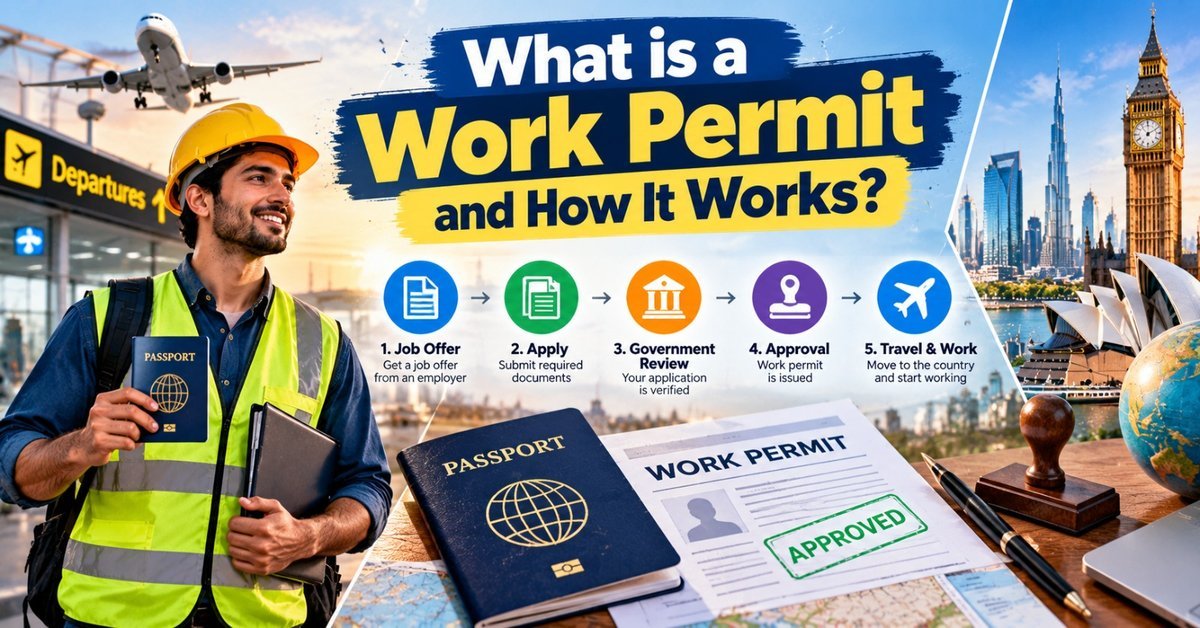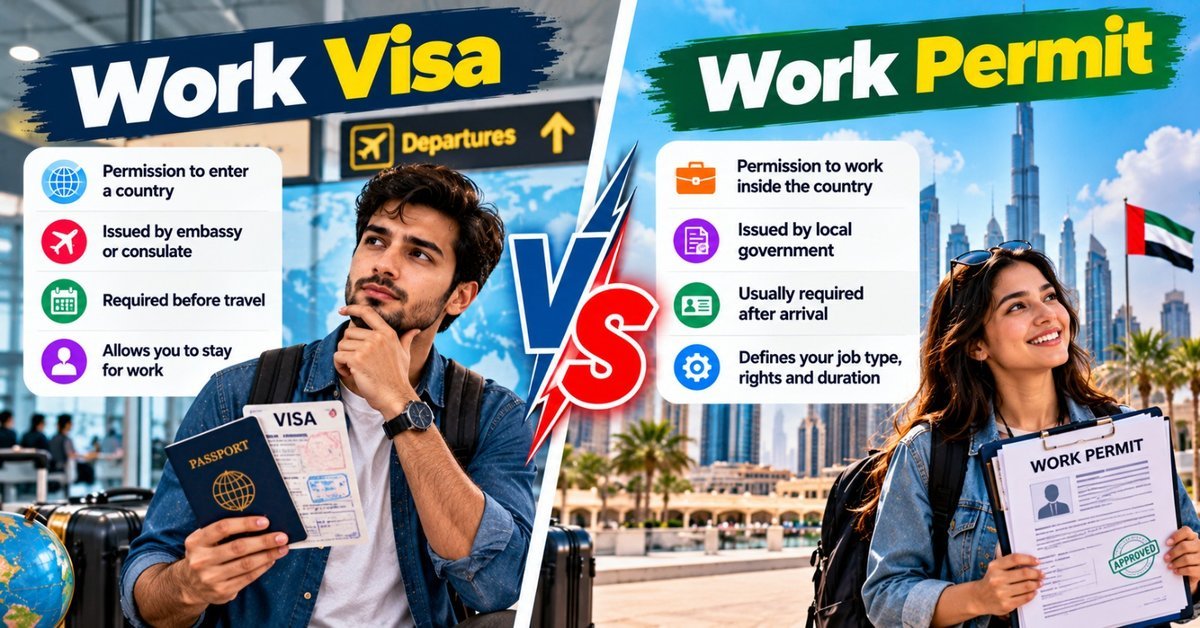
The main difference is purpose: a visa commonly lets you travel to a country and request entry, while a work permit authorises employment under set conditions. Countries use the words differently, though. Some work visas combine permission to live and work, and other systems need a separate travel document and employment authorisation. A job offer alone never gives you permission to start work. For a wider explanation see what a work permit is.
Quick Comparison
| Question | Work visa | Work permit or authorisation |
|---|---|---|
| Main purpose | Travel, entry or a combined work and residence route | Permission to do specified employment |
| Conditions that matter | Category, validity, entries | Employer, occupation, location, hours |
| Always separate? | No. Some visas include work rights | No. Work rights may come with status |
| Guarantees entry? | No. Admission is decided at the border | May still need a travel document |
Canada: Separate Documents
A Canadian work permit is not a visa. Depending on your nationality you may also need a visitor visa or an electronic travel authorisation to travel. Canada has employer-specific permits and open work permits, and an open permit is only for people who qualify in an eligible category. See the IRCC work in Canada page.
United Kingdom: The Visa Includes Work Rights
The Skilled Worker visa allows eligible people to live and work in the UK in an eligible job for an approved employer. You do not need a separate document called a work permit, but you must check what your permission allows and whether a change of job needs an updated application.
United States: Entry and Work Are Different Questions
A US visa lets you travel to a port of entry and request admission; it does not guarantee entry (see the State Department explanation). Whether you may work depends on your immigration category: some people are authorised through their status, while others need an Employment Authorization Document. USCIS explains the options on its working in the United States page.
Germany: A Residence Title May Authorise Work
The EU Blue Card is a residence title for qualified employment with its own qualification, job and salary conditions. An entry visa and a residence title can be different stages, so follow the instructions for your nationality and route.
Singapore: Approval and Issuance Are Stages
For an Employment Pass the employer or an employment agent submits the application, and approval and issue of the pass are distinct steps. The MOM page sets out each stage.
Australia and New Zealand
The Skills in Demand visa and the Accredited Employer Work Visa tie employment permission to a named visa route. An employer's willingness to hire does not remove the immigration requirements.
Employer-Specific or Open
An employer-specific permission may restrict you to the employer or position named in your approval, and an open permission allows broader work within its conditions. Before a second job, freelance work or a promotion, check that your permission covers it, and check remote work for an overseas company against local immigration conditions.
Checklist Before You Travel or Start
- What is the exact name of my immigration route?
- Does my nationality need a separate entry document?
- Who submits the employer application or sponsorship?
- What approval must I hold before I travel?
- When can I lawfully start the job?
- Which employer, occupation and location are allowed?
- What happens if I change job or my contract ends?
- Which document proves my permission and stay?
Compare names, dates and job details across every document, and resolve inconsistencies with the authority rather than the employer's verbal assurance. A tourist visa, interview invitation or offer letter is not employment authorisation.
What Should Pakistani Applicants Check?
- That any Pakistani recruiter is licensed. Agents placing workers abroad must be licensed Overseas Employment Promoters, which you can check on the Bureau of Emigration and Overseas Employment website.
- The emigration rules for your own arrangement. Taking a job without an agent does not remove Pakistan's own emigration requirements, so confirm them with the Bureau before you travel.
- Whether a home registration is needed. Regulated fields such as nursing and engineering have their own councils and destination regulators; the two are separate checks.
Frequently Asked Questions
Is a work visa the same as a work permit?
Sometimes the terms overlap, but the legal meaning depends on the country.
Do I always need both documents?
No. Some systems combine them, others need a travel document and a work authorisation.
Can I start work after receiving an offer?
Only when you have the required authorisation and meet its conditions.
Can I change employers with valid permission?
Possibly. Employer-specific routes may need new authorisation first.
Does a valid visa guarantee entry?
No. Admission is decided under the border and immigration rules.
Is a Canadian work permit a visa?
No. You may need a visa or an electronic travel authorisation as well.
Does my spouse get the same work rights?
Not automatically. Family permission has separate rules.
Which document proves my right to work?
The one your authority issues for your route. Check its conditions.
People Also Search For
Work visa vs work permit difference
Purpose differs.
Visa or permit to work abroad
Depends on the country.
Work authorization explained
Check conditions.
Visa permit comparison
Use the table.
Canada work permit not a visa
Separate documents.
UK Skilled Worker visa work rights
Included in the visa.
EU Blue Card residence title
Qualified employment.
Employer specific work permit
Linked to an employer.
More Job Guides
Related guides:
- What is a Work Permit and How Does it Work — permit explained
- What is Visa Sponsorship and How Does it Work — how sponsorship works
- How Long Does it Take to Get a Work Visa — realistic timelines
- What Happens if Your Employer Cancels Your Visa — job loss and status
This article is a general guide and not legal, financial or immigration advice. Reviewed on 12 October 2026 against official sources. Rules, fees and requirements change, so follow the official instructions for your own case.